Taking a look at 10 freshman who aren’t getting their due recognition as “impact freshmen” and/or NBA prospects. This list excludes McDonald’s All-Americans, and recruits from the “top classes” (Kentucky, Kansas, Duke, Arizona, Florida, North Carolina). I have only included prospects who I have seen live.
These are players who, in varying degrees, should be considered at the NBA level.
Players ranked in order of NBA potential.
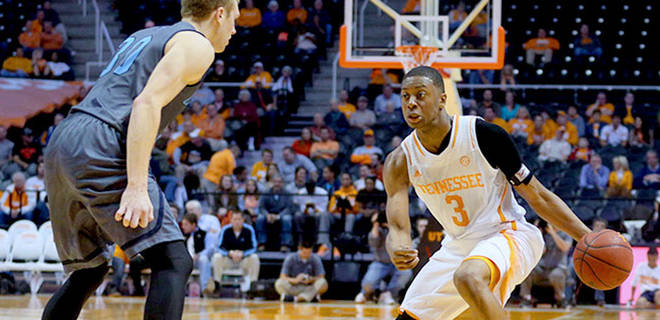
1) Robert Hubbs, Jr | Tennessee
SG, 6-5, 190
Quick Thoughts: It wasn’t long ago when Hubbs was an unknown prospect, both on the East coast and nationally. This was because a) he’s from Newburn, TN (population 3,500) and he played at little-known Dyer County HS, b) he didn’t play high-major AAU until the summer before his senior year, and c) he has a laid-back personality, shying away from attention and adulation.
In my opinion, Hubbs is the most underrated freshman in the country. I’ve seen him compete on three occasions, each time against completely different players: He had his way against point guard Andrew Harrison, shooting guard Aaron Harrison, and small forwards Troy Williams (Indiana) and Kuran Iverson (Memphis).
A 6-5, 190-pound shooting guard, Hubbs is a smooth scorer with shooting range and next-level body control. He is “long and fluid” — picture a young Tracy McGrady, not in terms of talent but in the sense that when Hubbs leaves the ground he’s acrobatic and athletic enough to figure it out mid-air. Hubbs can score from all three levels (perimeter, mid-range, at the rim). He is also extremely coachable—a well-mannered, I’m here to learn and play hard attitude.
His level of success at Tennessee will, obviously, be more indicative of his NBA potential than the high school circuit was. But in terms of freshmen shooting guards, Hubbs—who is currently ranked the 169th prospect in the 2014 Draft by ESPN’s Chad Ford—is right there with Aaron Harrison (ranked 28), Keith Frazier (91) and Wayne Selden (12).
How He Fits:
Projected Starting Lineup
F — Jarnell Stokes (Jr)
F — Jeronne Maymon (Sr)
G — Jordan McRae (Sr)
G — Josh Richardson (Jr)
G — Antonio Barton (Sr)
Tennessee features a veteran backcourt (particularly playing behind senior Jordan McRae), which means Hubbs will most likely come off the bench early in the season. However, someone close to the Tennessee program recently told me Cuonzo Martin recognizes Hubbs’ immense talent and potential, and regardless if he’s a starter or reserve, Hubbs will be featured in the offense this year.
Also, Tennessee has a dearth of players who can facilitate, so Hubbs may have to create for himself as a freshman, which is not an easy task.
Memphis transfer Antonio Barton is a score-first point guard; Jordan McRae is a ball-dominant shooting guard—he averaged 34 minutes per game and used 27.8% of his team’s shots when on the floor, the highest rate on the team; and Josh Richardson’s role will be as an on-ball defender. Freshman guard Darius Thompson could be the team’s best passer, but to an uncertain extent.
If Hubbs can usurp Richardson or Barton in the starting lineup, or even if he’s given a major bench role, he should emerge on the NBA radar at some point this season.
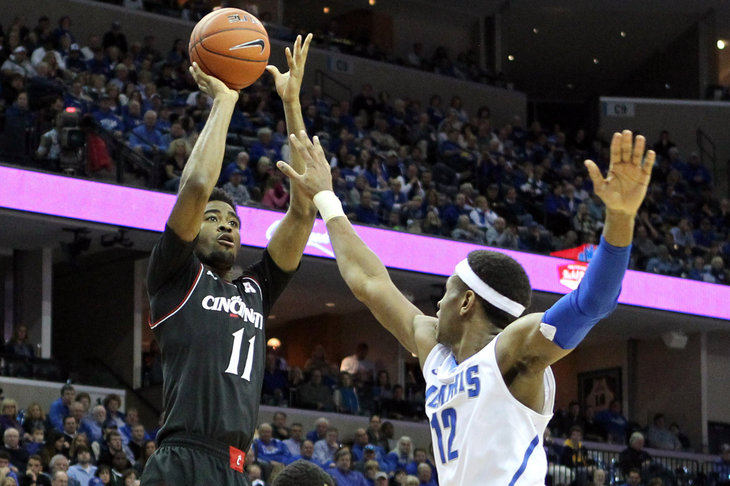
2) Jermaine Lawrence | Cincinnati
F, 6-9, 200
Quick Thoughts: Lawrence fell out of the national spotlight after he badly injured his wrist at the Pangos All-American camp in July 2012, which eventually required surgery. As a result, Lawrence spent most of his senior season rehabbing, and several college coaches/media outlets shied away following the injury.
Lawrence’s wrist is now fully healed, and the 6-9 forward is one of the most versatile freshmen in the country. He needs to get stronger, but his athleticism, slashing ability and versatility on both ends make him a valuable weapon.
— Offensively, he can score both inside and outside, has great vision for his size, is extremely agile and mobile. He can play both positions on the pick and roll, and uses his athleticism and speed to collect rebounds in traffic. The key to his development is improving his shooting and assertiveness. I’ve seen Lawrence excessively defer to teammates, even as far as passing up wide open looks.
— Defensively, Lawrence can block shots and legitimately guard three positions (SG, SF, PF). He’s one of those players whose potential is viscerally exciting, because it’s just so transparent.
How He Fits:
Projected Starting Lineup
F — Justin Jackson (Sr)
F — Titus Rubles (Sr)
F — Shaq Thomas (So)
G — Sean Kilpatrick (Sr)
G — Ge’Lawn Guyn (Jr)
Lawrence has an opportunity to make an impact early in his career, because his versatility on both ends makes him a difficult matchup. He will either start or be the first reserve off the bench, and could average close to a double-double as a freshman.
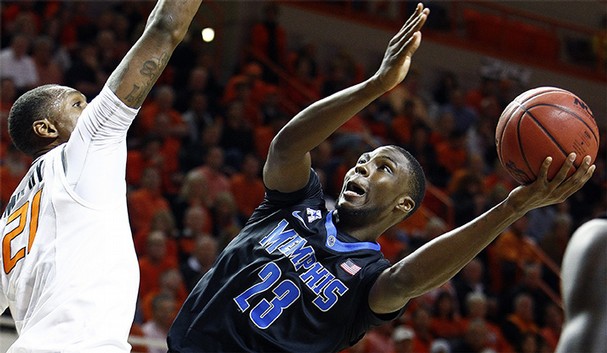
3) Kuran Iverson | Memphis
SF, 6-8, 205
Quick Thoughts: Iverson was heavily recruited as sophomore (ranked in the top-5 nationally), then while dealing with tendinitis in his left knee during his sophomore and junior summer, he missed many tournament events and fell out of the recruiting picture.
Now, he’s fully healthy and should make an immediate impact in college. Iverson is a versatile forward in the same mold as Jermaine Lawrence—he can play either forward position, with a developing handle that allows him to take bigger defenders out to the perimeter, which creates a mismatch. There is a lot of overlap in each player’s skills, but what differentiates Iverson is his strength and ball handling. Iverson has the ability to grab a rebound and lead the fast break.
The next step in Iverson’s development is for him to be more assertive and focused, as he’s prone to “coast”. When he’s locked in, though, Iverson’s size and skill-set make him a dangerous weapon.
How He Fits:
Projected Starting Lineup
F — Shaquille Goodwin (So)
F — Austin Nichols (Fr)
F — Chris Crawford (Sr)
G — Geron Johnson (Sr)
G — Joe Jackson (Sr)
Memphis showcased a balanced scoring attack last season, with four players scoring in double-figures, including returnees Joe Jackson, Chris Crawford and Geron Johnson. They weren’t the most efficient, as the four aforementioned players all ranked below the 80th percentile in points per possession, but nonetheless they were balanced.
The Tigers’ strength was–and will continue to be–their supreme athleticism, which allows them to play uptempo and score in transition. Memphis feeds off steals, deflections and rebounds to get out in transition, and Iverson fits in perfectly. Regardless if he starts or comes off the bench, Iverson can realistically spell any position other than point guard, and should have no problem playing 15-25 minutes per game as a freshman. Because Iverson can set up anywhere (top of the key, wing, high post, baseline, front of the defensive press), coach Josh Pastner can get creative in utilizing his versatility, which is exciting.
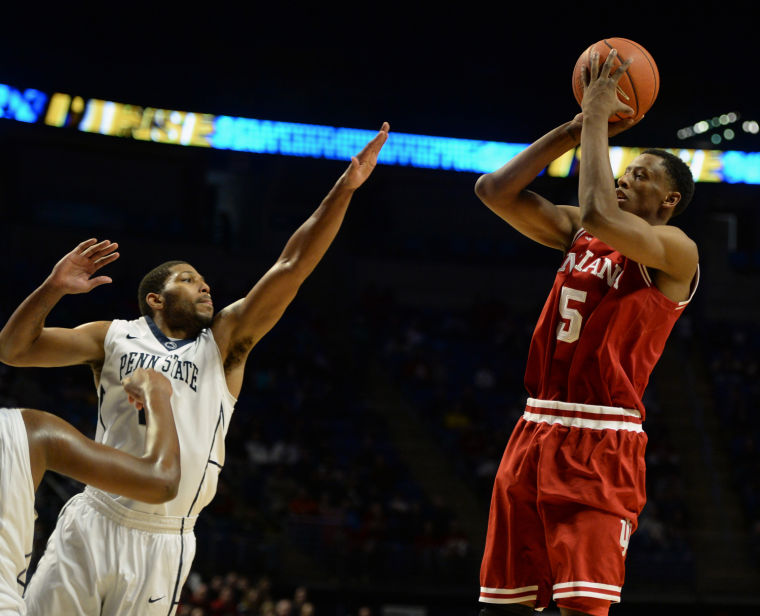
4) Troy Williams | Indiana
SF, 6-7, 195
Quick Thoughts: The nephew of AAU coach Boo Williams (who coached and mentored Allen Iverson and Alonzo Mourning, among others), I believe Troy Williams should’ve been a McDonald’s All-American last season.
Williams’ profile starts with his athleticism and energy. He’s explosive and fast in transition, and can use his length and athleticism to finish over bigger defenders at the rim. Although he doesn’t have a consistent shooting stroke, Williams has shown improvement pulling-up off the Athletic, fast, relentless effort, but he needs to develop his offensive skill set.
Defensively, Williams has the requisite length and quickness to be a terrific defender, but he gets overzealous and gambles a lot. This tendency to gamble was apparent at the Hoop Hall Classic last winter, when Williams was guarding Jabari Parker. He repeatedly lunged for steals rather than move his feet, stay with his man and trust his length to contest shots defensively.
Overall though, when he gets in a rhythm, Williams is a terrifying player on both ends of the floor, due to his athleticism, quickness and effort. He has NBA “flying” ability and blazing speed, and is gradually cultivating the skills to along with it. Certainly an interesting prospect to watch.
How He Fits:
Projected Starting Lineup
C — Luke Fischer (Fr)
F — Noah Vonleh (Fr)
F — Will Sheehey (Sr)
G — Evan Gordon (Sr)
G — Yogi Ferrell (So)
Williams has been sidelined with a hurt wrist for much of the preseason, but even still, he should get a chunk of minutes this season because Indiana is so young. In fact, because Evan Gordon and Yogi Ferrell are both under 6-foot-2, I think Tom Crean will be inclined to at least experiment with Williams in the starting lineup. Pairing Williams with Ferrell and Noah Vonleh will make for a transition-heavy approach that should allow Williams to showcase his talents.
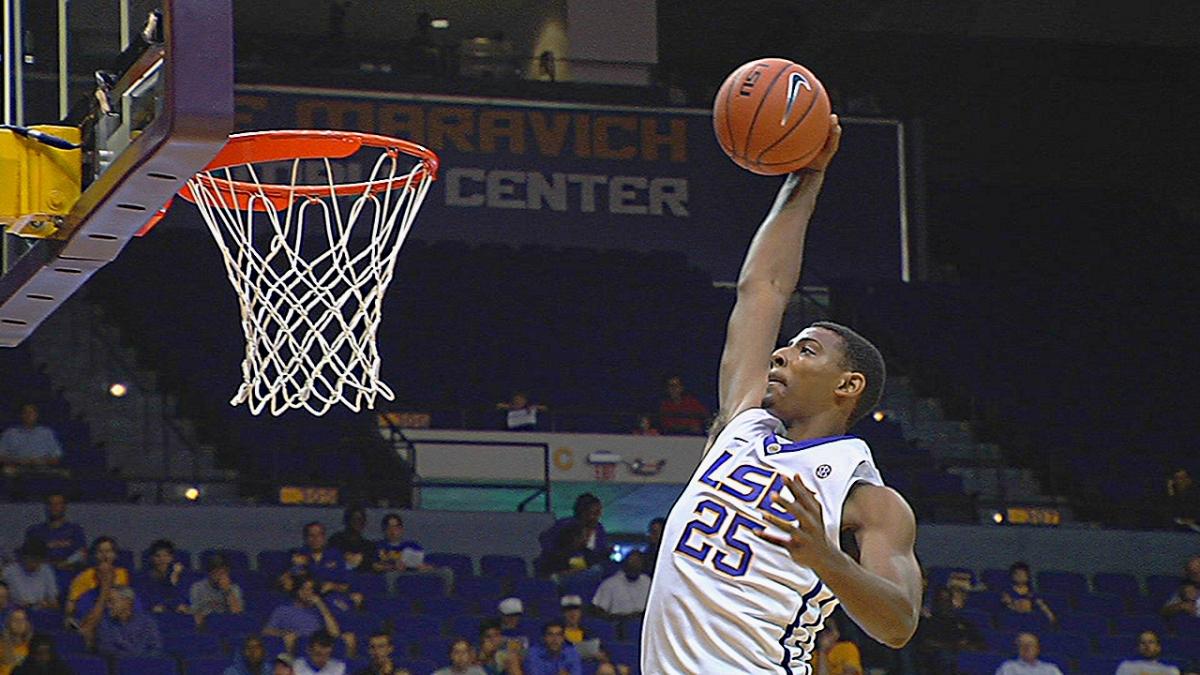
5) Jordan Mickey | LSU
F, 6-8, 220
Quick Thoughts: Mickey will probably spend at least three years in Baton Rouge, and will need to improve in several areas. Some believe Mickey’s NBA prospects should be revisited down the line. From my perspective, though, Mickey is “on the cusp” of breaking through.
Right now, Mickey is a bouncy athlete with tenacious rebounding instincts and excellent on-ball defense. He (sort of) reminds me of Andre Roberson – a tenacious defender with high activity and an energy level that never wanes. He projects to continue improving, and if he can tighten his ball handling and extend his jumpshot, he has a chance to be an NBA player. I believe Mickey is a jump shot away from cementing himself as a first-round draft pick.
He needs a better jump shot, but Mickey has NBA athleticism, a strong motor, attacks the rim with a purpose, and has great defensive instincts to track down shots in the open floor.
He and Jarrell Martin will be fun to watch next year, and at some point Mickey should crawl his way into the NBA conversation.
How He Fits:
Projected Starting Lineup
F — Johnny O’Bryant (Jr)
F — Jarrell Martin (Fr)
F — Shavon Coleman (Sr)
G — Andre Stringer (Sr)
G — Anthony Hickey (Jr)
This is difficult to project. Coach Johnny Jones will certainly let his freshmen compete for playing time (Martin will start), but I’m not sure where Jones will play Mickey this year. Is Mickey ready to play on the wing? Will Coach Jones let the 6-8 Mickey play exclusively down low? Maybe he’ll use Mickey on the baseline, or on the bottom of a 2-3 zone, utilizing his activity and athleticism to make things happen and create transition opportunities.
My take is: Mickey’s simply too talented to sit on the bench. But Jones will take it slow, gradually increasing Mickey’s minutes, as there’s no rush on this veteran-laden team.
6) Devin Williams | West Virginia
PF, 6-8, 200
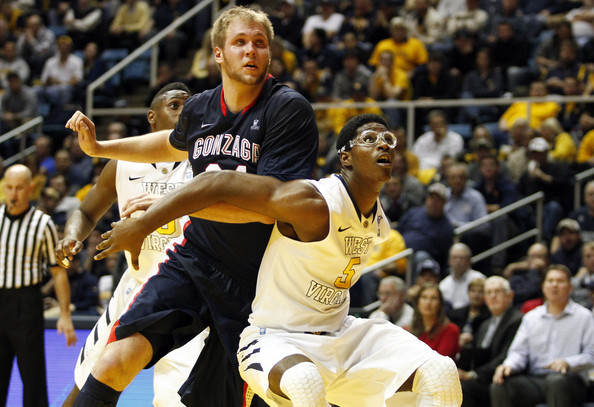
Quick Thoughts: Devin Williams is the quintessential Bob Huggins player – A rugged, ultra-tough throwback power forward, raised in the rough neighborhoods of Cincinnati.
Williams embraces contact and physicality, and attacks the glass tenaciously. He has a wide and chiseled frame—high school coach Kevin Boyle coined Williams as being “built like Superman”. He positions himself on the boards, sets strong screens to open up shooters, and consistently knocks down a 17-foot jumpshot.
Picture a less athletic Udonis Haslem, or more recently, a less athletic but more skilled Jackie Carmichael.
Williams is undersized at 6-8, and he plays below the rim, but his ultra-strong frame and tenacious mindset made him into one of the best rebounders in high school basketball. To elevate his game, he’ll need to improve his defensive footwork and show what type of on-ball post defender he is.
How He Fits:
Projected Starting Lineup
C — Kevin Noreen (Jr)
F — Devin Williams (Fr)
G — Terry Henderson (So)
G — Eron Harris (So)
G — Juwan Staten (Jr)
Playing on a young West Virginia team that lost seven players from last season, Williams will have an opportunity to test–and showcase–his skills right away. With fellow freshman Elijah Macon still awaiting NCAA clearance, Williams should start at power forward.
It won’t be easy to replace Aaric Murray, who led West Virginia with 5.8 rebounds per game last season and was an efficient scorer. But if someone can do it as a freshman, it’s Williams and his college-ready body.
7) Shannon Hale | Alabama
SF, 6-8, 210
Quick Thoughts: Hale committed to Alabama during his sophomore season and he remains under the radar. The 6-8 small forward is a decent athlete, with a high basketball IQ and natural feel for the game.
He’s a great shooter from the elbows, and is developing into a catch-and-shoot player from 3. His game reminds me of Jared Dudley, though Hale is skinnier and, obviously, less skilled.
How He Fits:
Projected Starting Lineup
F — Nick Jacobs (Jr)
G — Retin Obasohan (So)
G — Levi Randolph (Sr)
G — Rodney Cooper (Jr)
G — Trevor Releford (Sr)
Alabama returns only nine scholarship players, so Hale should get minutes early in the season. But it won’t be easy to make an impact considering Alabama’s returning players are mostly scoring-oriented. Releford used 24% of the available shots when he was on the floor; Cooper 22.2%; Jacobs 20.1%; Obasohan 18.9%; and Randolph 17%.
I predict that Hale won’t have a huge impact this season, but will emerge on the national radar as a sophomore and junior. I’m not sure if Hale has NBA upside, but he’s definitely worth keeping an eye on in the SEC.
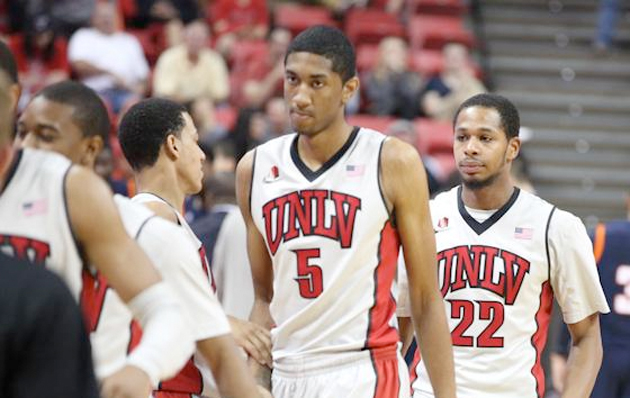
8) Christian Wood | UNLV
PF, 6-10, 210
Quick Thoughts: Wood fell under the radar because he committed to UNLV at the beginning of his junior year. He possesses a unique skill set for his size, as he can shoot the 3-ball at 6-10.
His jumpshot is smoother and more consistent than, say, freshman-year Isaiah Austin. He’s only starting to scratch his basketball potential—he has virtually no inside game right now, and is too skinny to finish through contact—but his size and shooting skills are there. If he adds muscle to his frame and displays any semblance of interior skills, Wood should earn playing time at UNLV.
Wood is young for his grade, and his combination of shooting and athleticism make him a prospect worth keeping track of.
How He Fits:
Projected Starting Lineup
F — Khem Birch (Jr)
F — Roscoe Smith (Jr)
G — Bryce Dejean-Jones (Jr)
G — Jelan Kendrick (Jr)
G — Deville Smith (Jr)
I’m not sure how Wood has physically developed since last season, but if he’s gained weight, he should see minutes in UNLV’s frontcourt rotation. Dave Rice has been known to play freshman, and considering Wood’s upside, I expect him to garner playing time from the start.
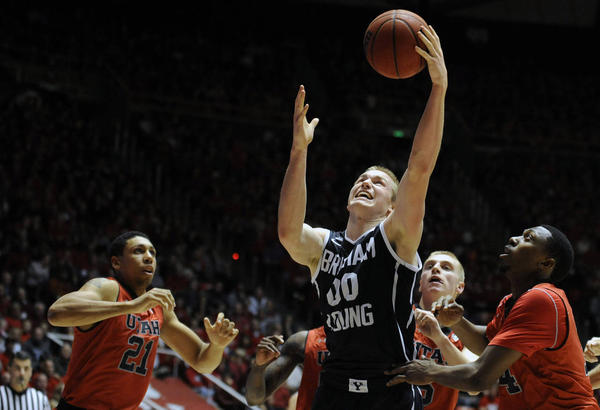
9) Eric Mika | BYU
C, 6-10, 220
Quick Thoughts: Even as a freshman, Mika should be one of the best rebounders and most physical centers in West Coast Conference, if not the entire country. He was the focal point of Lone Peak High School, which at one point was ranked No. 1 in the nation.
Mika is a traditional low-post center on the high school level, as he controls the paint, knows how to seal his man and can finish through contact. Mika doesn’t need to be “featured” to be effective, as he does the “little things” – setting hard screens, actively roaming the paint and attacking the glass.
If he can develop a 15-foot jumper, Mika should be an All-League player at BYU. The “problem”, though, is that Mika will depart on his Mormon mission after his freshman year, which could stunt his development. It will be an interesting situation to monitor.
How He Fits:
Projected Starting Lineup
C — Eric Mika (Fr)
F — Nate Austin (Jr)
G — Kyle Collinsworth (So)
G — Tyler Haws (Jr)
G — Matt Carlino (Jr)
Replacing Brandon Davies is not going to be easy, but Mika has the talent to do just that. In addition to getting post touches, I expect Dave Rose to use Mika as the team’s primary screener and to have him run the baseline. If he can stay out of foul trouble, Mika will be featured in every game.
10) DeAndre Bembry | St. Joseph’s
SF, 6-6, 165
Quick Thoughts: Bembry is a lanky swingman whose foundation is energy and activity.
That doesn’t mean he’s not skilled, though — he’s a good finisher, and plays suffocating defense thanks to long arms, quick feet and a relentless motor. Bembry is always locked in and as a result has a nose for the ball.
If he can develop perimeter skills to be a threat on offense (he showed flashes in the Jordan Brand regional game, scoring 26 points including three 3-pointers), Bembry could make noise in the A-10, considering how good of an on-ball defender he is. He’s not Briante Weber, but he should make a defensive impact from the onset.
How He Fits:
Projected Starting Lineup
F — Halil Kanacevic (Sr)
F — Ronald Roberts Jr (Sr)
F — DeAndre Bembry (Fr)
G — Langston Galloway (Sr)
G — Chris Wilson (Jr)
Bembry should start at small forward and play significant minutes as a freshman. He will have the opportunity to showcase defensive skill and offensive potential.
————–
In addition to those 10, here are five freshmen (in no particular order) who don’t look to be NBA caliber, but are nonetheless underrated and I think have a chance to develop beyond their perceived ceiling.
Cullen Neal | New Mexico
PG, 6-4, 170
Quick Thoughts: Neal is a classic example of why I take the well-known recruiting websites with a grain of salt – in April, when he de-committed from St. Mary’s to play for his father at New Mexico, ESPN automatically adjusted his profile from a 3-star, unranked recruit to a 4-star, Top 100 recruit. Simply because he switched schools.
Neal has great size at 6-4, has a terrific jumpshot and a ton of moxie. I’ve never seen him in a game situation, but I’ve observed individual workouts, and Cullen’s legitimate NBA-range and tight handle have always impressed me.
Although he won’t overwhelm with natural talent or physical gifts, Neal plays with a chip on his shoulder and is feisty competitor. He can deliver on-the-money passes using either hand. Under the tutelage of his father—former Georgia Tech standout and current New Mexico head coach, Craig Neal—Cullen is mentally years ahead of his age.
I think defense will determine Neal’s ceiling – if he proves to be a capable defender in the Mountain West, he may open some eyes. He reminds me of a passing-oriented Nate Wolters.
How He Fits:
Projected Starting Lineup
C — Alex Kirk (Jr)
F — Cameron Bairstow (Sr)
F — Deshawn Delaney (Jr)
G — Hugh Greenwood (Jr)
G — Kendall Williams (Sr)
With Tony Snell leaving, there is an opening in the UNM starting lineup, and the final spot will be decided based on what Coach Neal thinks the team can use. If he wants another ball-handler in the backcourt, he’ll start Cullen. If he wants an athletic swingman, he’ll start JUCO import Deshawn Delaney. Regardless, Cullen should get minutes as a freshman, either spelling Kendall Williams/Hugh Greenwood, or playing alongside them. And once Williams leaves for the NBA, Cullen will presumably take the point guard reigns for what should be a Top-40 team.
Kendall Yancy-Harris | Texas
PG, 6-4, 195
Quick Thoughts: The younger brother of former Miami Heat guard Terrel Harris, Kendal is an aggressive combo guard with impressive scoring ability. Harris finalizes plays in the open floor and loves to attack the paint. To elevate his game, he’ll need to develop his jump shot, particularly off-the-dribble. Also, although he is a good finisher, he often has tunnel vision and carelessly (and unsuccessfully) attempts to drive through multiple guys in the painted area.
How He Fits:
Projected Starting Lineup
C — Cameron Ridley (So)
F — Jonathan Holmes (Jr)
G — Demarcus Holland (So)
G — Martez Walker (Fr)
G — Kendal Yancy-Harris (Fr)
With Javan Felix out indefinitely (hip surgery), Harris may be inserted as the team’s starting point guard, pitting him against some of the Big 12’s elite backcourts (Kansas, Oklahoma State, Oklahoma, etc).
Dayshon Smith | Dayton
PG, 6-3, 165
Quick Thoughts: Smith’s scrawny build repelled high-major schools, but in a few years some coaches could be wondering how they overlooked him. Nicknamed “Scoochie”, Smith was one of the best scorers on the East coast. He is a combo-guard with a quick release on a consistent jumpshot, and uses a strong two-way crossover to break down the defense and penetrate the lane.
Smith is not the most athletic player, but he plays with a New York-sized chip on his shoulder and competes his tail off. Because he’s so skinny, though, Smith has difficulty finishing through contact. He often maneuvers his way into the lane only to lose his balance or get blocked.
If he fills out his frame, Smith could develop into a dynamite player for the Flyers.
How He Fits:
Projected Starting Lineup
C- Matt Kavanaugh
F — Devin Oliver (Sr)
F — Dyshawn Pierre (So)
G — Vee Sanford (Sr)
G — Dayshon Smith (Jr)
The Flyers lost their starting point guard and best player, Kevin Dillard, to graduation. Now coach Archie Miller will have to decide how to fill that void —Vee Sanford and Devin Oliver are secured in the starting lineup, as is (presumably) 6-10 senior Matt Kavanaugh (suspended last season). The last guard spot will either go to Ohio State transfer Jordan Sibert or Smith.
Regardless if Smith starts, he will get minutes as a freshman and should eventually be Dayton’s starting PG, beginning in 2014-15.
Greg McClinton | Wake Forest
SF, 6-6, 185
It’s been a difficult nine months for McClinton, who tore his right ACL last January for the second time in his young career (he first tore it in the 8th grade). Wake Forest coach Jeff Bzdelik speculates McClinton will return by Christmas, but no one knows what kind of player he’ll be post-surgery.
McClinton is an athletic small forward who can score inside the 3-point line. He has a strong basketball IQ and can finish with a variety of offensive moves in the half court. If he maintains his explosive bounce when he returns, he’ll have a chance to develop in Wake Forest’s system and eventually become a go-to player.
Going forward, he’ll have to develop his perimeter skills, and add weight to his frame. He’s a hard worker and has improved throughout his high school career, so although he has a tough road ahead of him, I’m not going to bet against McClinton just yet.
How He Fits:
Projected Starting Lineup
C — Devin Thomas (So)
F — Travis McKie (Sr)
G — Arnaud William Adala Moto (So)
G — Coron Williams (Sr)
G — Codi Miller-McIntyre (So)
McClinton is Wake’s best recruit, so he should see minutes upon his return. All eyes will be on his knee, and how his game has progressed (or regressed) since the injury.
Demetrius Dyson | UMass
SG/SF, 6-5
Quick Thoughts: Let me put this out there: I’ve only seen Dyson play once, in a “best of Memphis” All-Star Game that rewarded highlights more than defense.
However, the game featured about 20 high-quality recruits from the Class of 2013, ’14 and ’15, and Dyson was among the six or seven most impressive players at the event.
Dyson committed to UMass unusually late, in May of his senior year. He is a cousin of former Memphis swingman Rodney Carney, who played at Memphis when UMass coach Derek Kellogg was an assistant there, so there is some connection. But in terms of what contribution he will make at UMass – I’m not sure.
What I do know: A lengthy 6-5 shooting guard, Dyson showcased lots of skill off the dribble, pulling-up on a dime and converting a number of jumpshots at the event. He digs in on defense, using length and lateral quickness to deflect passes and disrupt shots. He’s athletic enough to defend both guard positions, and there’s no question he has mid-major abilities. I’m not sure if he has any NBA potential whatsoever (I doubt it), but for someone who is completely off the radar, at some point I think Dyson will make noise in the A-10.
How He Fits:
Projected Starting Lineup
C — Cady Lalanne (Jr)
F — Raphiael Putney (Sr)
G — Derrick Gordon (So)
G — Trey Davis (So)
G — Chaz Williams (Sr)
With a young backcourt (excluding Chaz Williams), there are several UMass guards competing for limited minutes. Dyson will have to earn playing time in practice, and time will tell if he has what it takes.